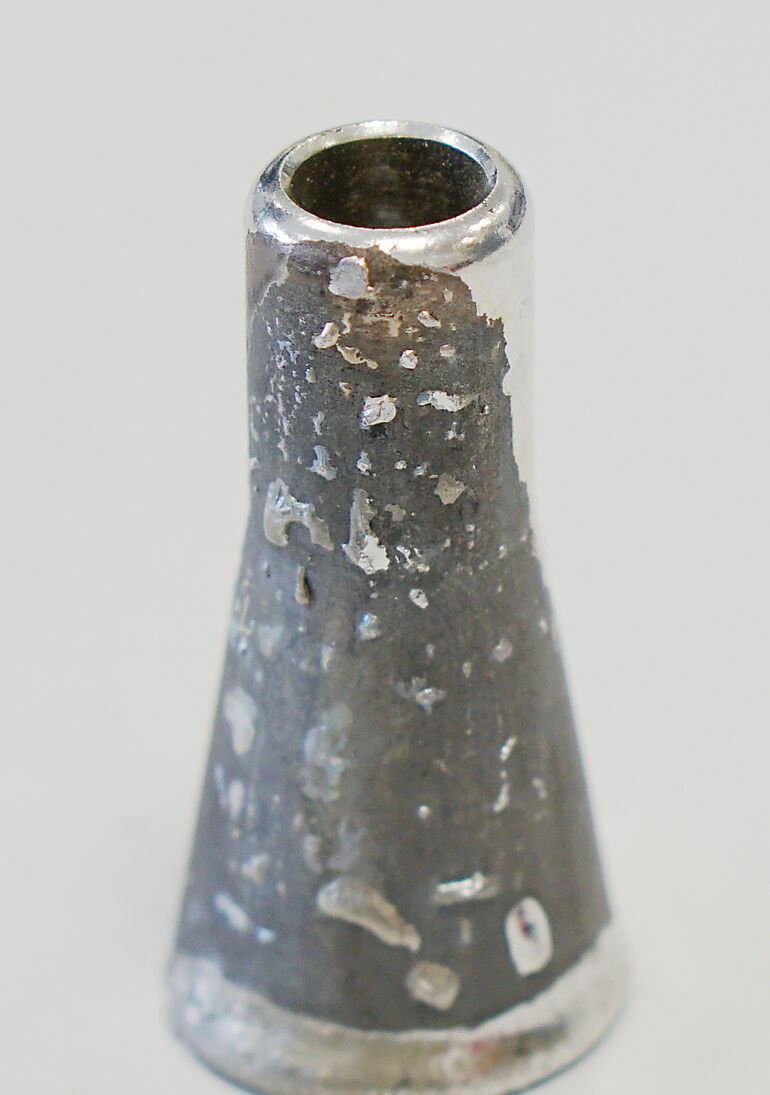
Dirty nozzles in selective soldering processes can cause the solder to not reach the solder joints evenly or in the correct amount. This can result in incomplete or poorly wetted solder joints that affect the functionality of the final product.
Effects of dirty solder nozzles
Residues in the nozzle can also lead to an uneven flow of solder. As a result, the solder flow is no longer controlled, increasing the risk of short circuits or bridging between neighboring solder joints.
Defective solder joints must be laboriously reworked. This not only increases production costs, but also the time required for quality assurance and troubleshooting.
Another serious drawback of residue on the nozzle is that it can interfere with heat transfer and temperature control during the soldering process. This can lead to inhomogeneous solder joints, resulting in either cold solder joints or overheating of the components.
In the long term, the build-up of residues on the solder nozzle can also have a negative effect on its material properties, which can significantly reduce the life of the solder nozzle. Higher maintenance and spare parts costs are then inevitable, often combined with unplanned downtime that affects overall production efficiency and slows down production.
Continuous care and maintenance of the solder nozzles is therefore essential. Although manual cleaning is a common method, it can be associated with various disadvantages that impair the production process in electronics manufacturing.
Disadvantages of manual cleaning
Manual cleaning of nozzles in the selective soldering process presents several risks and challenges. One major drawback can be the quality of the cleaning. The success of the cleaning process depends heavily on the experience and diligence of the operator, which can lead to inconsistent results. For example, residues on the nozzles are not always completely removed, which affects the quality of solder joints and leads to defects such as uneven solder joints or bridging.
Another disadvantage is the time required for manual cleaning. This results in downtime and a reduction in production capacity. Repeated manual cleaning also increases the risk of nozzle damage. Improper handling or mechanical cleaning processes can damage nozzle materials, resulting in higher replacement costs in the long term.