Stefan Strixner, Principal Engineer, Zestron Europe
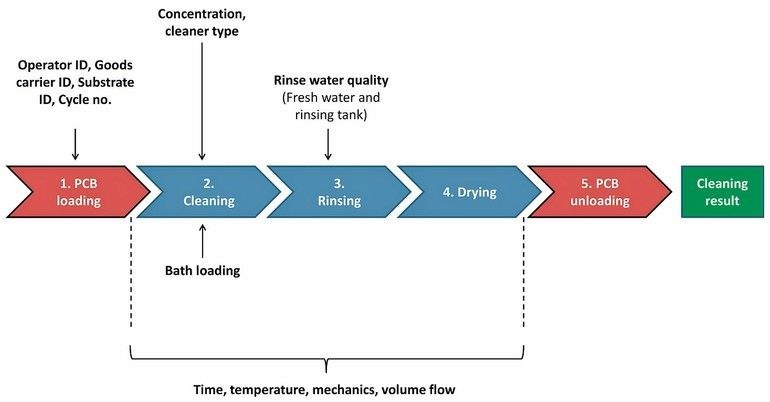
Numerous forms of process data can be recorded during a cleaning process. The two general parameters that can be assigned to each of the above-mentioned process steps are time and temperature.
Producing cleaning process data
Each process step has unique monitorable parameters:
1. Cleaning step:
- Chemistry type and batch number
- Cleaner concentration on the items to be cleaned
- Bath loading
- Ultrasonic energy & frequency
- Spray pressure, filter pressure, and/or differential pressure
- Flow rate (filter loading)
2. Rinsing step:
- Quality of rinse water or rinsing medium (fresh water and rinsing tank)
- Ultrasonic energy & frequency
- Spray pressure, filter pressure, and/or differential pressure
- Flow rate (filter loading)
3. Drying step:
- Air blowing pressure
- Filter pressure
- Volume flow
- Negative pressure (with vacuum drying)
Depending on the specific data type, a wide range of offline (manual) and online (automated) procedures can be used for recording the above-mentioned process data. Many cleaning machine manufacturers have already integrated automated data gathering tools into their systems. However, some procedures are either very specific or cannot be automated. (See table on top of page)
Whilst offline methods generally suffice to provide snapshots of process states, a continuous process and result assurance cannot be guaranteed, let alone any true traceability or substrate-specific assignment of the process data. In addition, not all the data that can be collected is critical to the results so that it only makes limited sense to record it in its entirety.