Indium Corporation’s Senior Technologist, Dr. Ronald C. Lasky, is a straight shooter helping people keeping process performance on target. In his well known blog on the Indium website he frequently interviews „the Professor“on productivity questions. The one question, wether the professor really is Lasky´s former mentor or maybe his alter ego stays a well kept secret.
Ronald C. Lasky, Ph.D., PE Indium Corporation
The Professor, as he is affectionately called by his students and colleagues, is, among other things, a profit sleuth. Using ProfitPro3 software he has been able to help electronics assembly professionals recover lost profit. Let’s go with him to his latest case:
The Professor enters the lobby of an electronics manufacturer in need. „Boy, am I glad to see you, Professor”, Jim says as he greets the Professor. „I’m losing money on line 2. I just can’t understand it.” As they walk to Jim’s engineering office, the Professor asks, „Can you tell me what has changed since my last visit?”
„That’s the funny thing,” Jim replies. „Nothing has changed. We locked in all the parameters we set at your last visit – when things were running so well.”
„Keep thinking”, said the Professor. „Well”, Jim continued, „I am sure that we didn’t adjust any settings. But we did make one improvement: Purchasing switched us to a cheaper solder paste. It was a great move as we went from paying eight cents per gram to five. Since each of our large boards uses four grams of paste, we calculate that this cheaper paste will save us more than $30,000 per line per year.”
„Continue”, said the Professor. „On line 1 we still use our original paste, but we’re getting ready to make the change there next week, to save even more money.” „Interesting”, said the Professor as he jotted down some notes.
The Professor asked Jim a few more questions about line 1, such as cycle time, set up time, downtime, numbers of operators, etc. Jim didn’t have all the answers, such as the amortization rate of the assembly equipment, but since the Professor was comparing lines 1 and 2 he used reasonable assumptions. Jim did know the profitability and productivity of line 1 and the Professor used this information to precisely cost model line 1. The work was made a little easier since both lines 1 and 2 produce the same product.
After this work, the Professor asked, „The production rate on line 1 is 281,689 units per year. What is it on line 2?” Jim made a few calculations with some production data and concluded that the production rate for line 2 is only 268,498 boards per year.
After a brief moment of consideration, the Professor pronounced, „We are losing production time!” The Professor fired up ProfitPro3 and, after a minute of inputting and number crunching, concluded that Jim is losing 20 minutes per day of production on line 2. „I can’t see where”, argued Jim, „Everything is exactly the same.”
„Let’s go look at the line.” suggested the Professor.
One of the challenges of finding 20 minutes of lost time is that it is such a small percentage of the company’s daily three-shift operation. This meant that the Professor had to be very patient in his observations. However, his patience paid off when, in the third hour of their watch, the Professor noticed something at line 2’s stencil printer. His keen eye detected the operator wiping solder paste from a freshly-printed board. The Professor and Jim approached the operator and asked, „Charlie, what’s going on?”
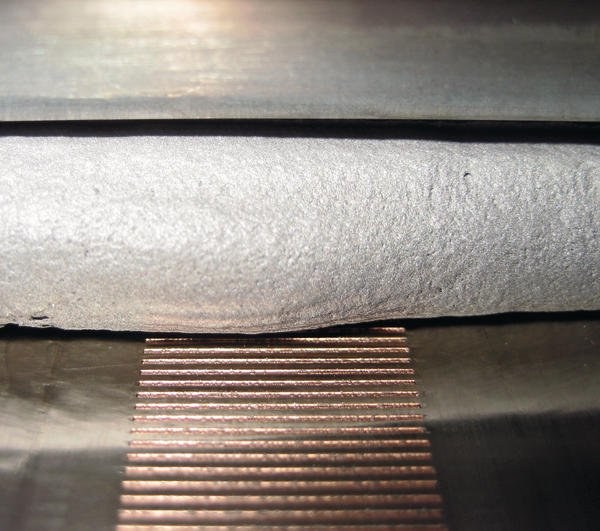
„Nothing out of the ordinary”, Charlie said. „We periodically stop production for routine replenishment of parts on the chip shooter. The line is only down for 15 minutes, but when this new solder paste is idle for this amount of time, it stiffens up. It doesn’t seem to have the same response-to-pause that our other paste has. The first print after pause doesn’t get enough paste, so we have to take that board out and wipe off the paste and then re-print it. This happens several times a shift. It’s a pain, but we only lose a couple of minutes each time it happens – and you can’t beat the cost savings we are enjoying.”
Upon hearing this, the Professor made a few calculations in his head. „That’s the problem”, he said. „If we calculate several minutes for each time you wipe the board, times several times a day, you have 20 minutes of lost time per day due to poor response-to-pause issues with the cheaper paste. Even though the cheaper paste costs 3 cents less per gram, and 4 grams are used on your large boards, the 20 minutes lost per day due to the cheap paste’s response-to-pause results in an actual loss of over $341,000 per year. The profit per board with the cheap paste is less because lost production amortizes fixed costs over fewer boards.” He then turned to ProfitPro3 to confirm his hypothesis and tease out the detailed results.
The Professor opined in a summary, „Solder paste is typically less than 0.1% of the cost of a finished electronics product. It doesn’t pay to save a fraction of this amount to use a cheaper paste when it negatively affects productivity or quality. In this case, purchasing saved the company $30,000 per year, only to give up $341,056 is profits at the same time.”
Jim immediately called purchasing to schedule an appointment to cancel orders for the cheaper solder paste, thankful for the day he first met the professor.
Dr. Ronald C. Lasky hilft gerne linienverantwortlichen Technikern bei Problemen mit der Produktivität. In seinem Blog stellt er dem „Professor“ oft entsprechende Fragen. Ob dieser tatsächlich Laskys früherer Hochschul-Mentor oder dessen Alter Ego ist, bleibt ein gut gehütetes Geheimnis.
Ronald C. Lasky est prêt à venir en aide aux techniciens responsables de lignes confrontés à des problèmes de productivité. Dans son blog, il pose souvent au «professeur» des questions à ce sujet. Quant à savoir si ce dernier est effectivement l’ancien mentor de Lasky à l’université ou s’il est son alter ego, le secret reste bien gardé.