- Is the constant operating temperature over 150 °C? If the answer is yes then you should opt for either UV cure or silicone material groups.
- Does the coating need any form of chemical resistance? If chemical resistance is required then select either UV cure or polyurethane material groups.
- Is only moisture protection required? If yes then select either UV cure or acrylic material groups.
- What is the application method?
- What is the cure time available?
- Do you need Mil-Spec, IPC or UL qualification?
- Insulating properties allow a reduction in PCB conductor spacing of over 80 %
- Can help eliminate the need for complex, sophisticated enclosures
- Light weight
- Completely protect the assembly against chemical and corrosive attack
- Eliminate potential performance degradation due to environmental hazards
- Minimise environmental stress on a PCB assembly
- Simple application
- Easy removal, repair and replacement
- High flexibility
- Protection against thermal and mechanical shock
- Protection against environmental hazards including: moisture, chemicals and other corrosive elements
- 1. Dipping – limited to materials that do not cure quickly by moisture, oxidation or light.
- 2. Selective robotic coating – such as Asymtek, PVA or DIMA. All coating types can be used if the correct dispense head is selected.
- 3. Spraying – hand spray using a spray booth or aerosol can. All coatings can be applied in this way.
- 4. Brushing – requires extremely proficient and skilled operators in order to be suitable for production purposes.
- 1. Acrylics – These are probably the easiest coating to remove and repair. The coating can be removed completely or locally by using specifically designed stripping chemistries. The board can then be re-coated completely of just in area of the repair.
- 2. Polyurethanes – These coatings are slightly more difficult to remove due to their chemical resistance capabilities, however they can be removed by using specifically designed stripping chemistries. The board can then be re-coated completely or just in the area of the repair.
- 3. Silicone – This is the most difficult coating to remove and the coating least compatible with all of the other coating types. There are no solvents to remove silicone so it may only be removed by abrasion and this will leave silicone contamination on the board surface. Complete removal is virtually impossible so local repair is generally all that is attempted
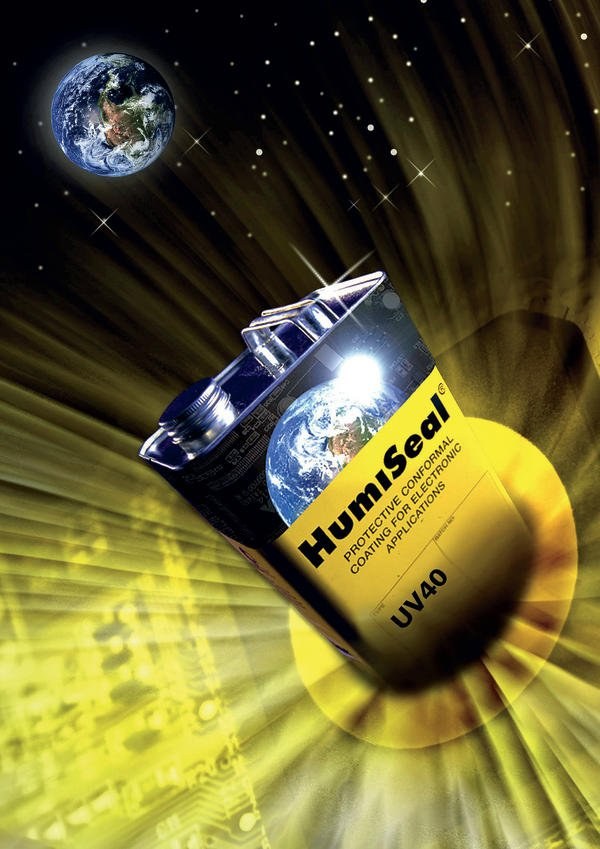
- 4. UV cure – These materials are also more difficult to repair as they are the most chemically resistant and mechanically tough of all conformal coatings. Removal is possible locally by using powder abrasion. HumiSeal has developed a specific system for removal of our UV40 UV cure material. For local device replacement it is possible to melt through the UV40 coating to de-solder joints. After repair the board can be re coated and cured using short wave UV light.