Seica SPA, Strambino (Italy)
Hence, for the operators in the industry, including those who have handled test issues in-house, it is essential to identify the right, qualified partners to implement the solutions needed to keep up with product evolution. This becomes even more true when talking about automatic test systems.
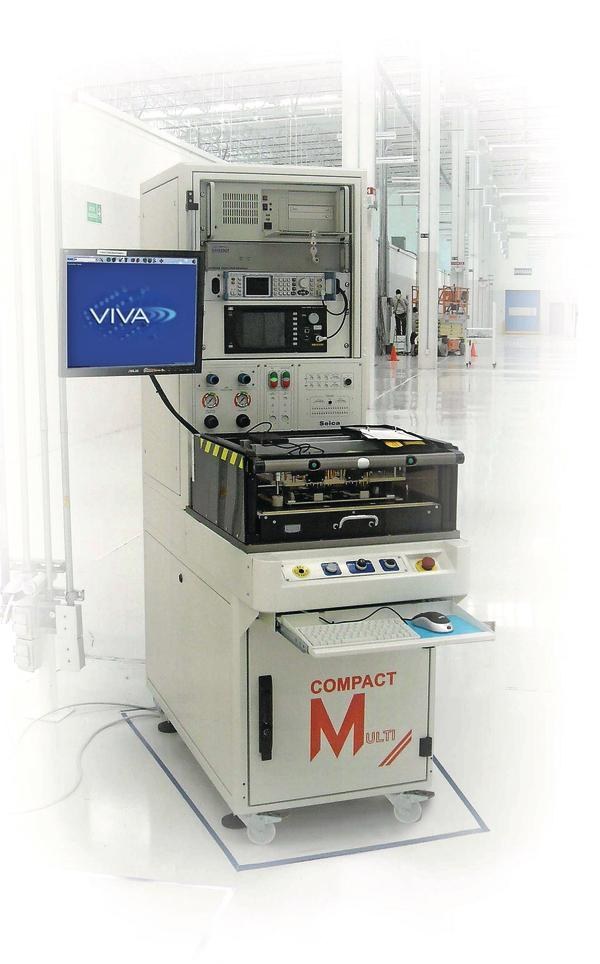
Even though functional test is generally considered complex to implement, expensive and having significant execution times, it remains key in ensuring that a product is functioning correctly. Therefore, whenever it is critical to provide a high level of quality assurance in terms of functionality, functional test is essential, since, in principle, the verification of the device is tested by simulating, as realistically as possible, the normal operating conditions of the module.
On the other hand, the bus-structured architecture of modern boards simplifies test generation and allows partitioning of functions for a simpler test approach. The combination of powerful test language with high performance channel cards (large pattern depth and full timing control) favors conversion of test specifications into test programs. Also, as boards integrate more and more functionalities, the ability to add verification of analog and mixed-mode clusters, under loading conditions, is a major operational control that only functional testers can give you.
Functional validation is generally done before the product is completely assembled in all of its parts, including those mechanical. The advantage of performing the test at this point in the process, is the optimal accessibility to the circuit under test, enabling better diagnosis of any critical conditions detected. The same test is often repeated when the product is fully assembled, for the purpose of finding faults deriving from the final assembly process.
In the past, many companies equipped themselves to develop and manage testing in-house, but consequently they found themselves in a situation where the testers implemented were neither modular or scalable and were difficult to maintain, all of which made it difficult to reuse them for later generation products. These types of difficulties underline the advantages of being able to rely on the support of a partner, and not a mere supplier, to meet the requirements of validation.
One of the characteristics to be taken into account in the selection of this kind of partner, is their experience in working in different sectors of electronics, from the simplest consumer product up to complex systems, for example those used in the defense sector. This “wide angle” exposure often makes it possible to spot and anticipate technical solutions and possibly market trends which may be transversal, and consequently can be applied to different customers and sectors.