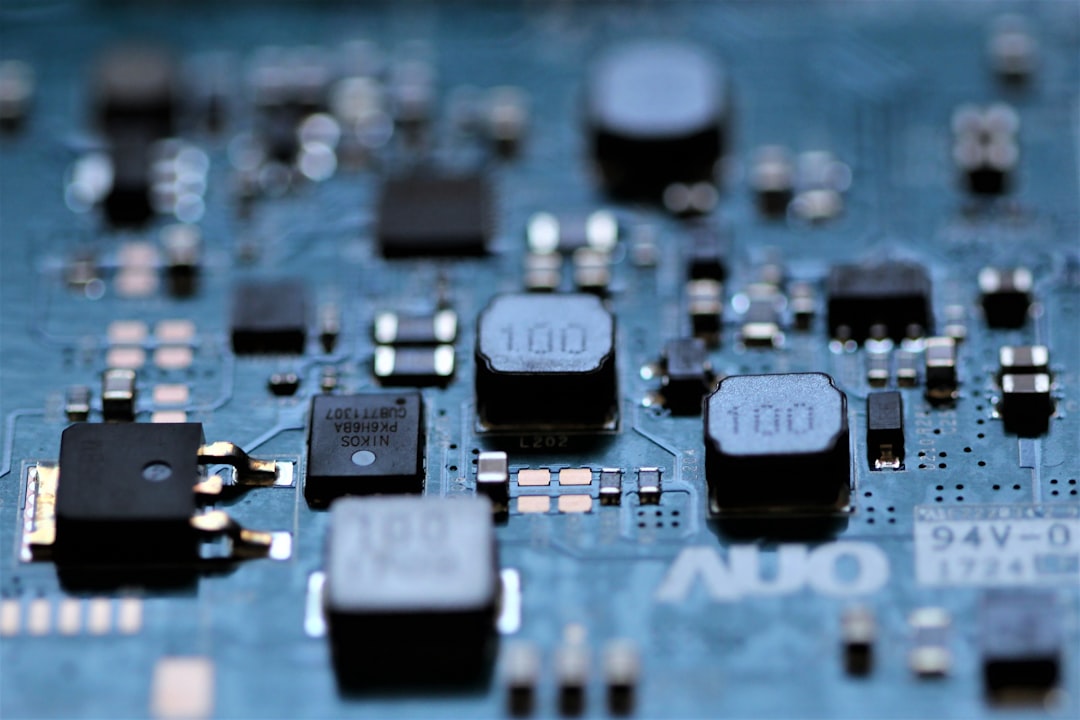
As electronics are deployed in increasingly harsh environments — from automotive underhood applications to outdoor industrial controls and medical devices — the need to protect assembled PCBs from environmental stressors has become a standard engineering requirement rather than an exception. Conformal coatings serve as a thin, dielectric protective layer applied over the finished assembly, conforming to the contours of components, solder joints and board surfaces. Their primary function is to prevent degradation caused by humidity, condensation, ionic contamination, dust and moderate chemical exposure, all of which can compromise insulation resistance and trigger electrochemical migration or corrosion over time.
Despite their relatively straightforward purpose, conformal coatings involve a range of material chemistries, application technologies and process considerations that must be carefully matched to the end application, the assembly geometry and the production environment. Getting this combination right determines whether the coating provides genuine protection or introduces new failure modes such as delamination, bridging or inadequate coverage.
Material Chemistries and Their Protective Characteristics
The five classical conformal coating chemistries — acrylic (AR), epoxy (ER), silicone (SR), polyurethane (UR) and paraxylylene (XY, commonly known as Parylene) — each offer a distinct combination of properties. Acrylic coatings are widely used in consumer and industrial electronics because of their ease of application, fast ambient-temperature drying and straightforward reworkability with common solvents. Their moisture resistance is good but not exceptional under prolonged immersion conditions.
Polyurethane coatings offer stronger chemical and abrasion resistance than acrylics, making them appropriate for assemblies exposed to fuels or solvents. Epoxy coatings provide high hardness and excellent humidity resistance but are difficult to rework and can transmit thermally induced stress to solder joints during temperature cycling. Silicone coatings are the preferred choice for high-temperature applications, maintaining flexibility and dielectric integrity across wide thermal ranges, though they present adhesion and reworkability challenges. Parylene is deposited by chemical vapour deposition in a vacuum process, yielding pinhole-free films of exceptionally uniform thickness — typically 5 to 25 µm — with outstanding dielectric and moisture-barrier properties. The process is batch-based and cost-intensive, limiting its use to high-reliability niches such as implantable medical devices or aerospace electronics.