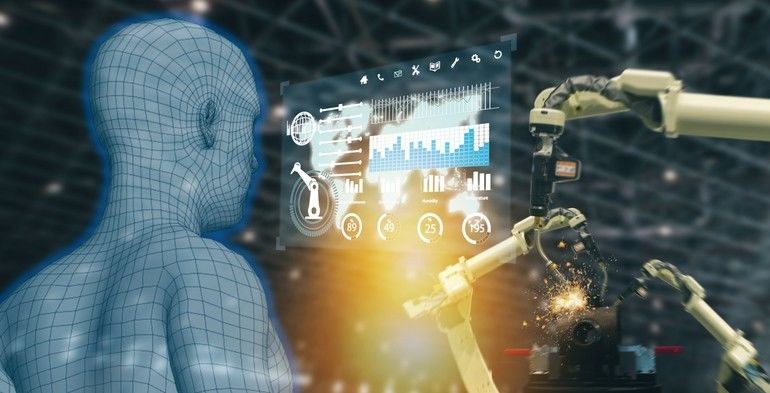
At present, AI is not ‘thinking.’ It cannot simulate or approximate the human capacity for intuition, inference, creation. In reality, it is not yet even close. It likely will be at some time, and we need to think toward that and plan for that, but to envision current applications predicated on a false belief in actual cognitive ability in AI is wasteful and unproductive. So, what is AI good for? One need only look slightly below the surface of even the marketing for AI applications one might see on television.
Artificial Intelligence applications
Finding snow leopards on a mountain face against which they are nearly perfectly camouflaged — finding the pattern within an archeological site image that would suggest where something of interest is located. These image processing applications are ideal for AI — because AI is good at finding patterns within images that, while humans also can do it, we find it tedious, slow, and are sloppy at it. AI algorithms don’t bore or degrade in their diligence and are even better than humans at reliably finding pattern matches at great speed in huge volumes of images. This pattern-matching capability is a great application for AI.
Other current excellent applications of AI involve speech recognition, text-to-speech, and noise detection/cancelation. Once taught and given parameters, AI is excellent at evolving automatically to cancel noise from content more fluidly, and refining the way it understands a speaker, and how it might speak back.
The above examples, while not exhaustive, have commonality. Whether sound waves or raster images, AI excels at learning patterns, automatically evolving its comparative patterns, and making matches and suggestions. AI is differentiated from traditional algorithms in its ability to self-learn. In the snow leopard example, it would be possible to write a traditional algorithm that finds snow leopards, of course. But for this algorithm to improve, coders would have to continually refine the algorithm, and publish new versions regularly. The AI version gets better on its own because it learns and continuously refines the algorithm itself. AI is also adept at high-speed acts of tedium humans loathe, but this learning also enables it to become better at it—on its own—over time. The more it does, the better it becomes, so to speak. It is in this area of detecting anomalies or changes in patterns, becoming better at it with greater use and exposure to the problem, and pointing them out that AI has current and powerful potential.
This pattern recognition and mapping extend to multidimensional, large volumes of patterns within data sets. Humans are woefully lacking in this area. Imagine extending the snow leopard search, not to one mountain but thousands, then add a third dimension to the data set of each.