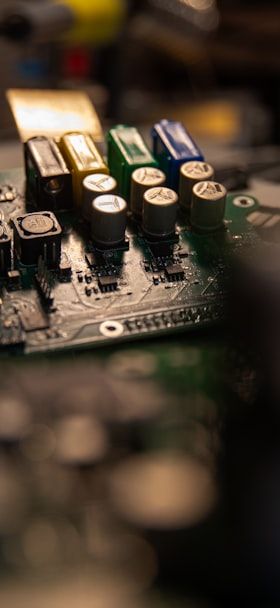
While lead has been placed in the center of activity, the alternative solder alloys of the SAC (tin, argentum/silver, copper) type are of special interest. But it seems doubtful that one heavy metal (lead) can be replaced by another such as copper. The toxity for organisms is still there. Have the EU’s representatives not fully understood the situation when they forged the RoHS directive? Timothy Townsend from the University of Florida stated in a Daily Telegraph’s article that in the study upon which RoHS is based the risk to organisms and environment was overstated. He thinks that the products from decomposition of lead-containing e-waste in landfills pose no high danger. This can be seen in-line with the EPA (US Environment Protection Agency) report saying that lead-free solder, needing remarkably more process energy, can be more hazardous than the metal now banned.
Also remarkable in the context of this discussion is the Greenpeace rating of a number of renowned global players (Acer, Apple, Fujitsu Siemens, Dell, HP, Lenovo, LG Electronics, Motorola, Nokia, Panasonic, Samsung, Sony, Sony Ericsson, Toshiba) in regard to their ecological awareness and procedures, leading of course to an upheaval. The greens presented a study based on topics such as chemical management, phasing out of vinyl plastics (PVC) and brominated flame retardants, takeback of e-waste where not legally required, and on the amount of waste collected and recycled. The findings of Greenpeace: there are no really “green“ mobile phones or PCs. Nokia and Dell had the best scores, the worse was for Lenovo, the others in-between.
This is how the greens came to their conclusions: evaluating the companies’ activities according to the information placed on their web sites. The intention seems clear, the organization wants to place even more attention to environmental concerns, especially in the west where it has become a crucial criterion for many consumers. One thing has also become evident so far: the companies haven’t published all ecological measures, so many of their actions obviously not known to the public. On one hand, this appears as an invitation to better “green” public relations, but also for optimizing or putting forward more efficient eco activities. The green organization wants to conduct this rating now every three months; therefore giving everyone a new chance.
The EU and Greenpeace show good intentions. However, in their pursuits, all available aspects have to be taken into account. Environment protection isn’t simply “number crunching” for ratings or an off-hand identification of hazardous substances, but also the development of sustainable alternatives that can really protect our natural environment. The RoHS directive doesn’t appear to be the last consequence. Instead, in the long run we hopefully will see more useful procedures.
This planet is the only one we have to leave to future generations.
Advisor to EPP Europe