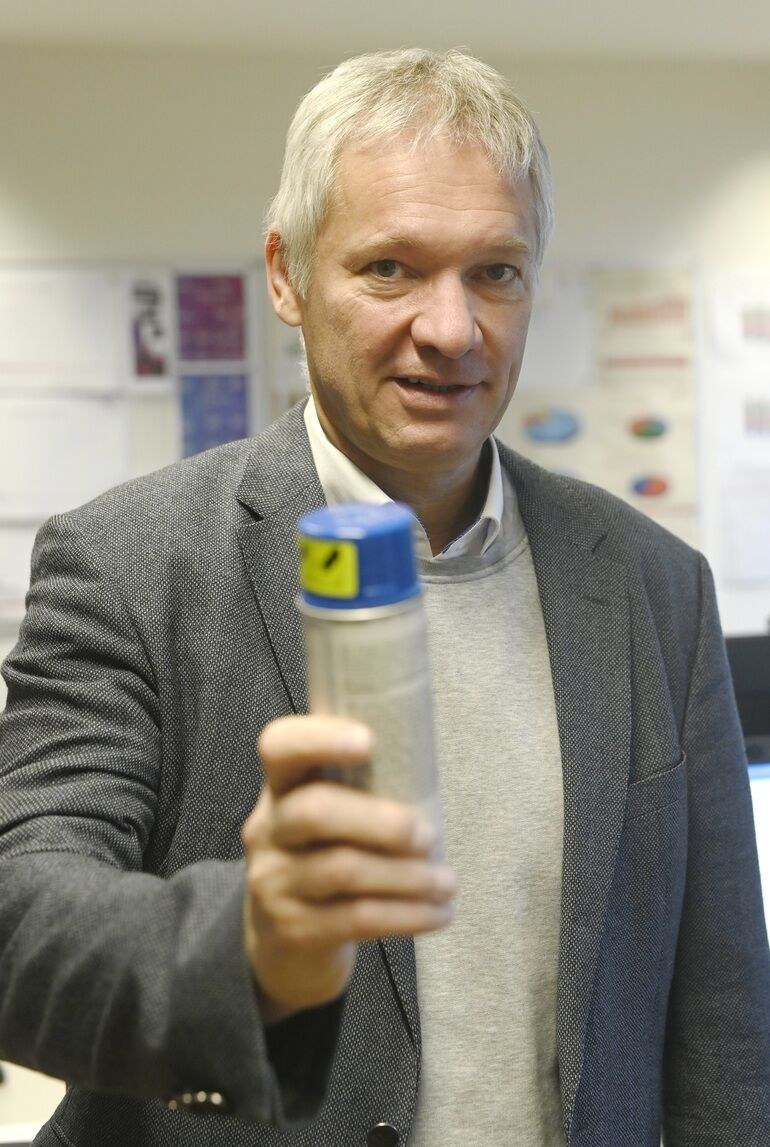
Peters is an associate partner in the project, which is planned to run until spring 2026. Research laboratories such as the Heinz Nixdorf Institute and the Fraunhofer Institute for Mechatronic Design Technology IEM as well as other leading technology companies are also cooperating,
Laser-structurable primer
3D-MID technology stands for ‘moulded interconnect device’, i.e. injection-moulded components. The radar transceivers integrated in this way are directly connected to the antennas in order to minimise losses due to reflection, attenuation or phase shift. The quality of the primer plays an important role in the partial metallisation of the plastic parts so that electronic circuits can be integrated on them. ´
Applied by injection molding, the laser-structurable primer supplied by Peters ensures that the innovative radar system can be integrated directly into plastic attachment parts on the vehicle. The primer product FP 1321–1029 is known in the industry for its excellent adhesion even on difficult substrates and under harshest conditions. The coating offers, among other things, a high corrosion protection and chemical resistance, both in frost and heat. Curing takes place through a chemical reaction of the components. “The black, laser-structurable primer also adheres excellently to plastics and to polyamide in particular,“ explained Markus Wieler, Global Business Development Manager at Peters.
Transferring MID technology to automotive engineering
Through its involvement in the consortium, Peters says it will ensure that a technology already commonplace in the smartphone sector continues to expand its potential in automotive engineering. ‘We are doing pioneering work in this field.” Metallisation after priming creates conductor patterns on 3-dimensional components. ‘The process is called 3D-MID,“ said Wieler. With this structure-integrated electronics, MID4automotive develops cost-effective, high-performance and highly integrated radar systems that can be incorporated directly into plastic surfaces.