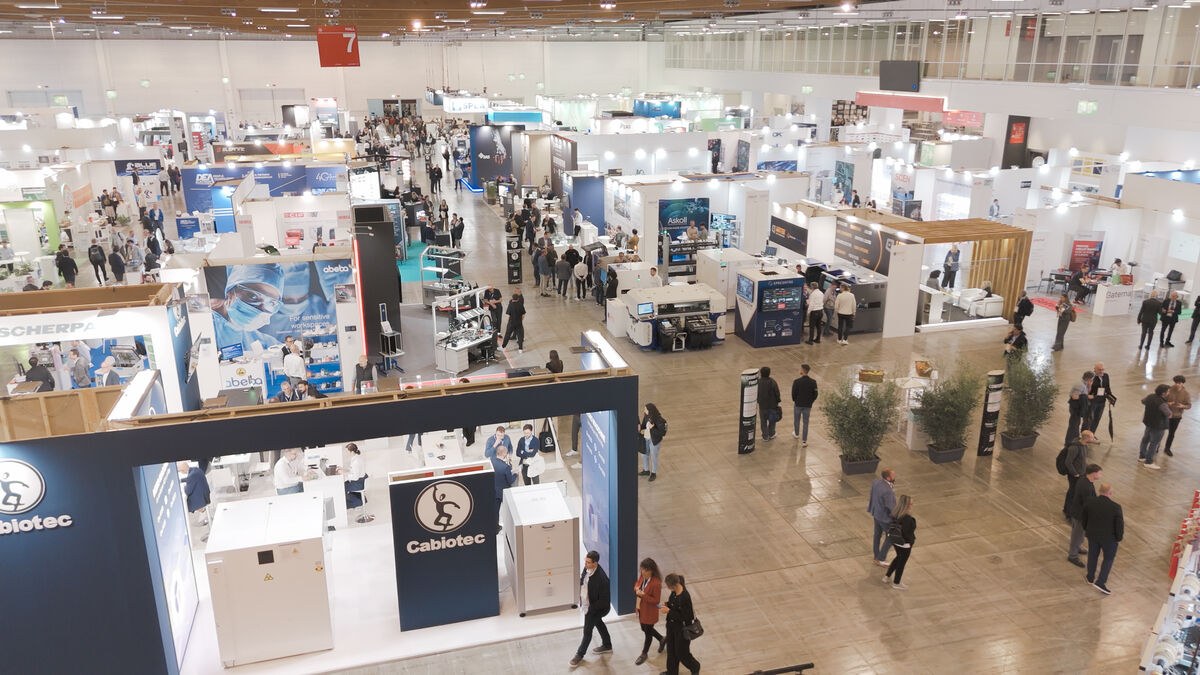
The event attracted attendees from around thirty European and non-European countries, with Germany, the United Kingdom, and Slovenia leading the way. The number of overseas exhibitors increased from 22% in 2025 to 26.5% this year.
Danny D‘Alessandro, Managing Director of Nürnberg Messe Italia, emphasized the importance of the event. He said the event: “Demonstrates the resilience of the European and Italian electronics sector. It aims to offer visitors and industry professionals a valuable platform for fostering dialogue and connections among all players in the European electronics supply chain”.
Supply chain, geopolitics, investments
At the event, a roundtable discussion addressed resilience in the manufacturing ecosystem brought together three of the most influential figures in the European supply chain: Alison James, Executive Director of the Global Electronics Association Europe; Thomas Michels, Vice President of the European Interconnect Industry (EIPC) and CEO of ILFA; and Cosimo Musca, President of ANIE Componenti Elettronici.
The issue is more urgent than ever: how can the European PCB supply chain be strengthened in a geopolitical context where dependence on Asia has become a matter of strategic security, not just cost? What policy levers exist? What investments are needed? Where is the battle for Europe’s technological autonomy being fought? A key take home message was that the response to the sector’s major challenges depends on coordination between stakeholders rather than on individual company strategies.
Soldering competition
One competition at the event that kept visitors on the edge of their seats was the IPC Hand Soldering Competition. It is the only Italian leg of the international hand soldering competition organized by the Global Electronics Association. In 2026, the winner is once again Alessandro Manicone of Elettronica GF, who claimed the title for the fourth consecutive time. Manicone will represent Italy at the World Championships in Munich during the electronica trade fair in November 2026. Last year, he finished fourth, demonstrating the excellence of Italian professionals in the electronics sector.
This year, for the first time, the competition was extended to include wiring, opening the contest to an additional technical specialty in high demand. It‘s a clear signal that, in a sector where the integration of diverse skills is becoming increasingly central, competitions must evolve as well.