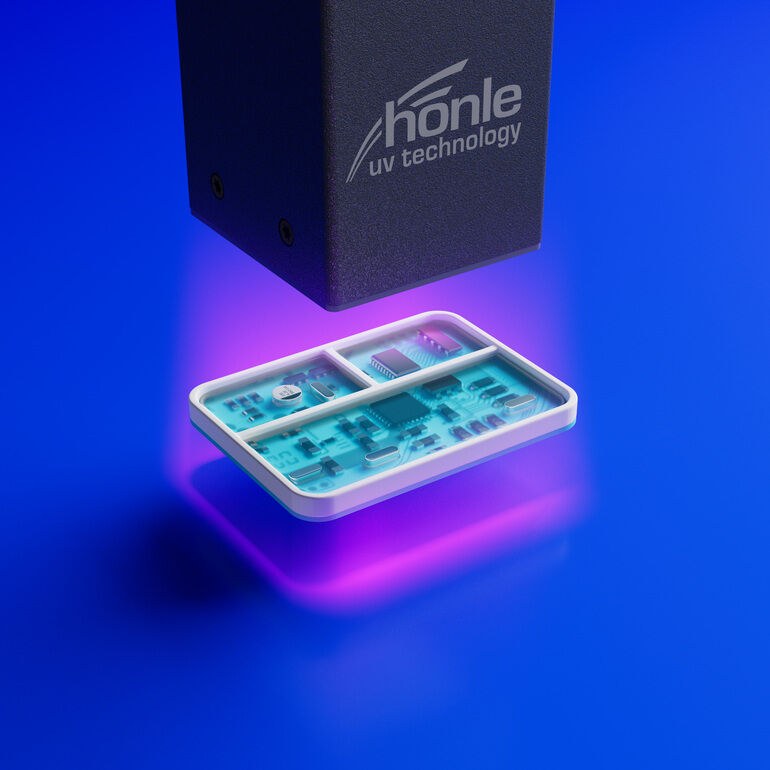
The product is formulated with a modified isocyanate acrylate and can be cured by irradiating with broad spectrum UV-A or by using LED wavelengths of 365 or 405 nm. The initial curing of the adhesive using UV/visible light secures it to the component in only a few seconds. The adhesive will then utilize atmospheric humidity and surface moisture to complete its curing in areas that were shadowed from UV/visible light exposure. This second phase of curing occurs without imparting thermal stress on sensitive electronic components. The adhesive system relies on both UV/visible light exposure and reactivity to atmospheric humidity for proper curing and cross-linking.
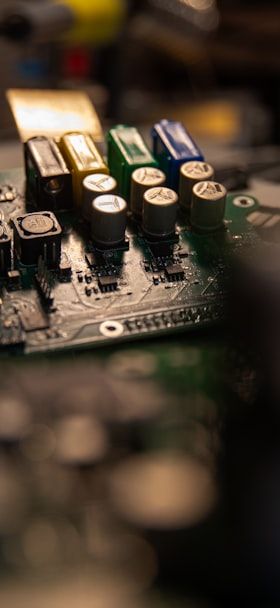
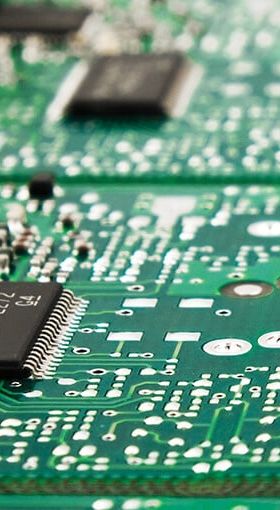
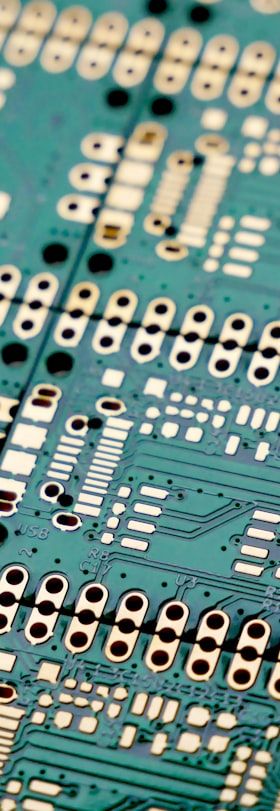
The rapid build-up of mechanical strength prevents warping of the bonded substrates and enables the components to be processed or transported quickly. This makes the adhesive ideal for applications with shadow zones or complex component geometry. These challenges are often found in consumer electronics when securing components on printed circuit boards (PCBs), or in sensor assembly.
Vitralit UD 8060 F is characterized by a high elongation at break of up to 130% and very good adhesion to various substrates such as PC, PMMA, FR4, copper and aluminum. Its temperature resistance ranges from –40 °C to +130 °C. The adhesive also demonstrates very good resistance to humid conditions. Bond strength values remain consistent after 85/85 tests (85 °C / 85% RH, 120 h).
Compared to other products in the Vitralit 80 series, Vitralit UD 8060 F offers a particularly soft, flexible bond that can absorb mechanical stresses well. This property makes the adhesive ideal for bonding materials with varying thermal expansion coefficients, and for applications in which vibration loads can occur. It is a transparent UV adhesive that contains a fluorescent tracer that is only seen when exposed to UV light. This permits fast visual inspection for enhanced quality control.
Like all Panacol adhesives, the product is RoHS-compliant and free from heavy metals and phthalates.