In today‘s electronics manufacturing industry, standards for defect and quality control are stricter than ever due to advancements of electronic products and increasing safety and environmental regulations. Electronics manufacturers are forced to maximize their production efficiency by implementing lean manufacturing initiatives and optimizing production processes. With this in mind, manufacturers are relying upon Automated Optical Inspection (AOI) equipment to streamline the manufacturing process and provide real time root cause analysis of manufacturing defects. The objective is to increase profitability by improving production yields and reducing costly rework.
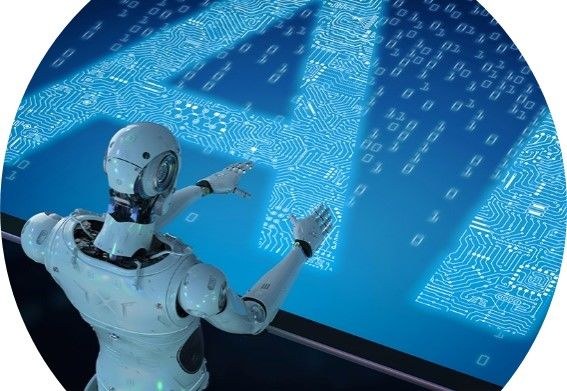
In recent years, 3D AOI machines have developed rapidly, and many new functions have been added. While these performance improvements are welcome, they have added another level of complexity to the programming and optimization of the inspection system. 3D AOI machines require much more parameter manipulation for teaching and debugging resulting in increased dependency on the skill of the process engineer. This presents a host of new challenges. If a skilled employee is replaced or a new employee is introduced due to the addition of more SMT lines, productivity may be adversely affected until the skill level of the employee is improved. Such uncertainty and instability are something that electronics manufacturers must avoid in order to maintain quality control. This is where the need for Artificial Intelligence (AI) is highlighted. In short, the goal of using AI is to reduce the level of operator proficiency required to maintain the highest levels of manufacturing quality and efficiency.
AI-based deep learning
Perhaps the most difficult challenge for lower-skilled AOI programmers is the task of determining which Package Library Shape is suitable for inspection of a given device. Because the components used to manufacture PCBs are so diverse, even experienced programmers may fail to find the most suitable Library Shape which in turn adversely affects productivity. The Auto-Matching function uses AI-based deep learning in order to maximize the efficiency and accuracy of the AOI programming process. When this function is used, work time can be reduced by 90% compared to traditional manual teaching and 50% compared to automatic teaching without deep learning. Best of all, even unskilled operators are able to maintain the teaching quality of about 85% of the highest skilled operators.
Automatic debug and parameter optimization
Debugging is an operation in which inspection algorithms and or parameters may be adjusted to yield optimal inspection results. It is a stage in which the skill level of the operator has a greater influence than the teaching operation. Operators who may not have a clear understanding of a given inspection machine may struggle to set program optimal inspection conditions suitable for the products being produced, which often results in poor performance. On the other hand, even if an experienced operator is more familiar with parameter settings the task of debugging an given inspection program may be very time consuming.
The Optimum Inspection Tool (OIT) is an off-line software solution that provides automatic debug and parameter optimization of a given PCB by analyzing multiple inspection results. After teaching using the Deep Learning Auto Matching and Teaching Tool, the programmer simply inspects the PCB, and reviews the inspection results for each ‘defect’ to determine whether or not the questionable inspection item is defective or good, the software then learns the result and suggests optimal parameter values. Users do not need to worry about parameter values, they only need to determine whether it is defective using human judgment. For optimal results, the sufficient number of inspections required to complete the debugging process is approximately ten (10) PCBs.
Enhanced inspection performance
As discussed above, AI-based teaching and debugging will effectively increase the quality and efficiency of the inspection program. However, this process has no bearing on the actual performance of the AOI system. The next logical step is to use AI to help maximize the accuracy and repeatability of the inspection algorithms themselves.
A good example of where AI may be used to enhance inspection performance is the Optical Character Recognition (OCR) algorithm. OCR is used to read the characters printed or engraved on devices to determine whether or not the proper device has been installed in the appropriate location with the correct orientation. OCR is a routine source of false calls due to font changes and poorly printed or damaged characters. This adds a level of complexity to the AOI system. Mirtec has been able to achieve the best character recognition rate amongst competitive systems through the use of AI-based deep learning in which images of characters with numerous fonts, colors, and shapes are continuously captured for analysis. In fact, it has now reached a level where the system software is able to recognize if there is damage to the text and partially recover characters using multi-angle lighting. Based on such a high recognition rate the software provides an automatic character teaching function. During automatic teaching the OCR algorithm will automatically extract the text area from the image captured by the main camera to create an inspection window and target string.
Deep learning is also applied to the Foreign Object Detection (FOD) algorithm which inspects the PCB surface around the circuitry for foreign materials. Foreign Object Detection is another source of false calls making it increasingly important to accurately determine whether the object detected is actually a foreign object or a feature of the PCB which should be ignored by the inspection algorithm. Applying deep learning to FOD inspection significantly lowers the false call rate and dramatically improves manufacturing quality.
Defect classification is a common process in which the operator will make a judgement call on each individual defect called out by the AOI post inspection. It is here where the operator would determine if the device in question is truly defective or acceptable (meaning a false call was generated by the AOI). This process may also be greatly improved through the use of deep learning in which the system software will continually store the operator’s recorded defect classifications and compare these with future inspection results. This is a cumulative process which becomes more and more accurate over time. Eventually, the system will be able to automatically classify defects and false calls with a high degree of accuracy without operator intervention. The goal is to ultimately standardize quality control by eliminating operator intervention within the defect classification process.
A vision for the future of AOI
Electronics manufacturers are becoming ever more selective in purchasing equipment that will add value to their business and provide them with a much-needed ‘edge’ in this highly competitive industry. There is little doubt that Artificial Intelligence will play a huge role in maximizing the efficiency and profitability of the manufacturing process. Mirtec continues to invest heavily in the development of AI-based technology specifically designed to improve the performance and convenience of its complete line of AOI machines by eliminating any adverse effects of human intervention within the inspection process.
Company contact
MIRTEC CO., LTD.
SK Ventium 103–801,
166, Gosan-ro, Gunpo-si,
Gyeonggi-do, 15850 Korea
Zusammenfassung Résumé Резюме
KI-basierte Technologie verbessert die Leistung von AOI-Systemen durch Eliminierung aller nachteiligen Auswirkungen menschlicher Eingriffe in den Prüfprozess.
La technologie basée sur l‘IA améliore les performances des systèmes AOI en éliminant tout effet négatif d’une intervention humaine dans le processus de contrôle.
Технология на основе искусственного интеллекта повышает производительность систем AOI, устраняя любые негативные последствия вмешательства человека в процесс контроля.