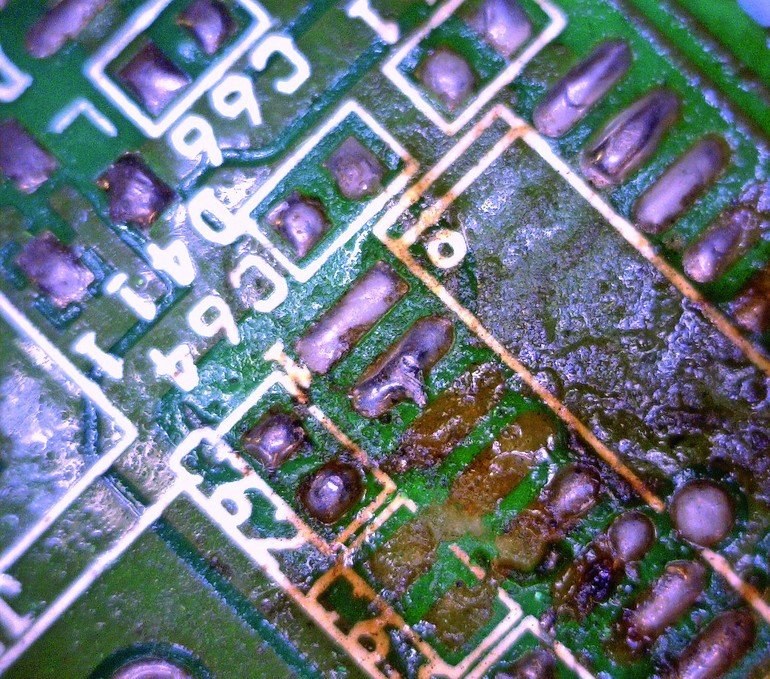
- Intrinsically electro-chemically dissimilar metals (e.g. Gold/Tin and Silver/Nickel), or the creation of an anode and cathode by application of applied voltage or potential difference.
- The presence of an ionic species (usually Halides, Hydroxide etc).
- The presence of mono-layers of condensed water, to dissolve the ionic species resulting in an electrolyte solution.
- The coating must display excellent adhesion to the substrate in question under both dry and highly humid or damp conditions to prevent delamination. This is made more complicated by the potential adverse effects on adhesion of the various residues of modern, ‘no-clean’ assembly technologies, and the importance of the application and curing of the solder resist by the board manufacturer.
- The coating must fully cover the exposed metal surfaces in order to be effective as a moisture barrier. Exposed leads, (micro)-voids in the coating, such as cracks, bubbles, de-wetted areas etc. will serve as corrosion hot-spots; once the corrosion process starts, it will continue through the metal and potentially beneath the protective coating.