- Programming and debugging capabilities and features – are they efficient enough for you to get optimum solutions?
- Hardware integration – are you sufficiently flexible in the integration of the instrumentation next to the point of measurement? Would it not be more efficient to locate the measurement equipment close to the device under test (DUT)
- Cabling and wiring – you have selected the appropriate hardware for this solution, but extensive and costly wiring is needed for the connections. However, your goal is to achieve an absolute minimum of cables and wires because of serious constraints in accuracy, space, costs, signal integrity, maintenance, etc.?
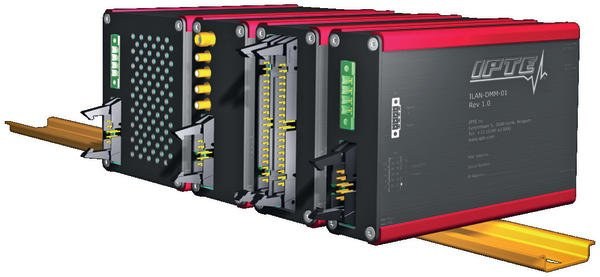
- Space requirements – since space is limited in the system would you like to use a compact module that is saving you up to 50% and in some cases even more. Does it need to fit as a boxed module or is it needed to be integrated as PCB assembly to save even more space?
- Customizing – do you need to adapt the hardware as closely as possible to the application requirements and want to have easy access to the solution?
- Signal conditioning – the input and output signals do not always match the specifications of the test hardware so do you need to convert signal levels, handle timings, etc. according to the system specifications?
- Separate computer – is it really always necessary to connect a full-blown PC to control relatively simple measurement and test solutions?
- Programmable power supplies/battery simulators (up to 36 V, 3A, resolutions down to 1 mV, 1 mA)
- Digital multi meters (up to 400 V, up to 10 A; true RMS, max. sampling rate 250 k/s)
- RF power meter (field strength frequency 76 MHz to 2.5 GHz)
- Audio DSP analyzer (multi channel analysis, 20 Hz to 20 kHz)
- Digital and analog I/O unit and communication (3,3V up to 24V levels, 16 analog input channels, 12bit)
- Switch units multiplexer/matrix/relay (different configurations)
- CAN bus controller (port CAN transceivers, high/low speed)
- FM radio transmitter (76 to 108 MHz, audio generator, external input, mono/stereo)