» By Gabriel Sikorjak, Omron Electronic Components Europe
Market demands as well as safety and environmental legislation are calling for all cars to become smarter, more assistive, more connected, and sustainability conscious. To deliver these values, car makers are adding more sensors, computing power, and communication capabilities and electrifying more subsystems, from water pumps and power steering to the entire drivetrain. It is a trend that presents challenges and opportunities for the automotive supply chain.
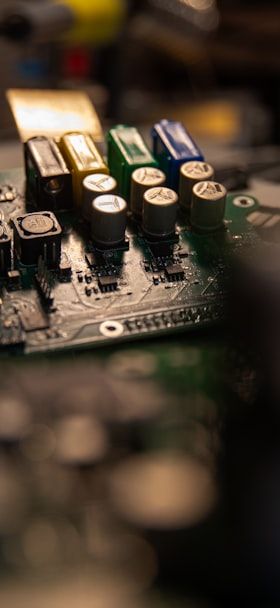
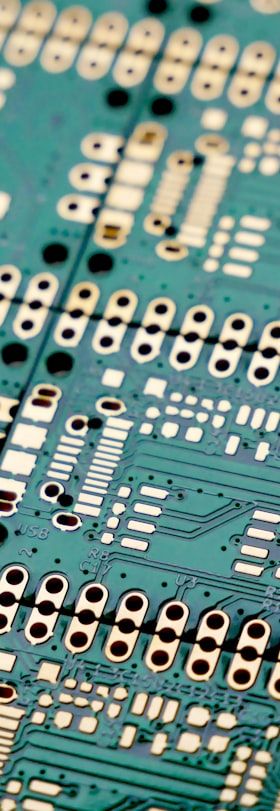
Contact test solutions for advanced equipment using probes could prevent suppliers from meeting their objectives, as test contact points are becoming smaller, more closely spaced, and more difficult to reach with conventional sprung test probes (fig. 1). Furthermore, connecting with the DUT (device under test) at a single point creates an unreliable solution. All electronic devices are affected, from semiconductor wafers to ECU modules, as component geometries are being reduced and PCB assemblies are more densely populated. Also, intricately designed vibration-proof connectors used within the automotive industry present difficulties for probes to achieve contact when placed on the test fixture (fig. 2).
Problems with sprung test probes, or pogo pins, are already common. The pins often fail to make proper contact with the test point. Based on actual research, only 80% of occasions when tests are performed using standard pogo pins result in the DUT being correctly classified. Such errors result in high false-NG rates that require investigation and re-testing. In addition, the typical lifetime of a pogo pin can be about 100,000 cycles. At automotive mass-production volumes, this can demand frequent stoppages for replacement. Inaccurate results and frequent stoppages both impair productivity and cause delivery delays.
Also, the contact resistance due to conventional pogo pin structure can be inconsistent and is not usually less than 70 mΩ, which can prevent testing assemblies where contact resistance needs to be low. A generally accepted practicable minimum diameter for conventional sprung pins is about 0.35 mm. Reducing the size can prevent reliable contact with test points as the probes can become fragile, leading to more frequent malfunctions and breakages. And yet, smaller test pins are required to meet future demands. An alternative is needed to ensure efficient, fast, and accurate contact testing.
Pin limitations
Conventional pogo pins are carefully designed to possess compliance that allows tolerance for a small amount of positioning error, as well as spring force to press against the DUT test point and ensure a robust electrical connection with low ohmic resistance. However, the mechanism adds complexity to the design and seizing or other malfunctions are possible as the DUT is placed on the test fixture.
The pin can break or the spring may fail if positioning error or force is excessive. Further reducing the mechanism size, to permit closer positioning needed to test densely populated boards, results in the pin being more fragile and more easily broken.
Creating an alternative that overcomes these limitations while also supporting the drive towards smaller geometries is not easy or trivial. A suitable pin must provide adequate compliance to let the pin find its place against the test point as well as ensuring adequate and consistent contact force. At the same time, durability needs to be improved to minimize stoppages to replace broken pins and prevent false NG results that can result from poor electrical contact and inconsistent contact resistance.
A new type of test pin made with a specially developed electroformed (EFC) metal alloy and fabrication process now presents a solution to meet these demands. The custom material provides mechanical properties comparable to 304-grade stainless steel (SUS304/SS304) and meantime electrical properties achieving great conductivity at copper level. The combination of alloy properties and dedicated pin design (fig. 3) allow one-piece pins that eliminate the size restrictions and potential for seizing associated with the conventional spring mechanism.
The pins let test engineers create high-reliability test fixtures with a pitch down to 0.175 mm. Because the pins have been shown to make proper contact with the test point on over 99.8% of test operations, the risk of false NG results from poor pin contact is greatly reduced. Also, with a lifetime easily reaching 500,000 cycles depending on application and design, their longevity improves efficiency and reduces stoppage time. The one-piece design ensures consistent electrical parameters and extremely low contact resistance, typically about 30 mΩ, which is suitable for testing products like OLED panels. Moreover, flexibility to optimize all aspects of the pin size, shape, and tip design means the pin properties can be adapted for a wide variety of applications.
EFC pins are suited to pin blocks and complete custom sockets for board-level testing and are also used in optimized fixtures for IC and other component testing, or even device test. They have been designed for testing high-end modules with high transmission speeds, as well as high-power electronics at levels much above 2 A per pin for unique bundle structure, meantime reaching highest testing durability.
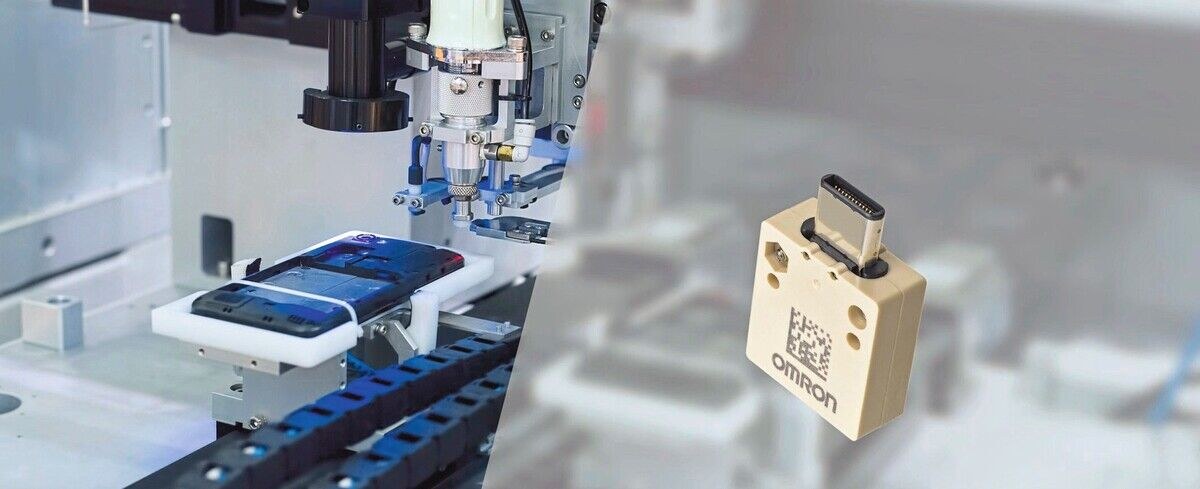
There is also an off-the-shelf product. The unique test socket for USB Type-C connections combines EFC pins with resin pin tips and a special floating head mechanism that allows one degree of tolerance in X-Y positioning (fig. 4). The floating head ensures fast and faultless insertion to avoid stoppages when used in test equipment while the special internal pin structure extends the endurance of testing sockets compared to existing means.
Conclusion
Pogo pins have a long and distinguished record in the history of electronics testing; however, the geometries of the latest components and assemblies are becoming too small for conventional pins. Creating a suitable solution has demanded innovation both in materials science and electroforming production processes. New one-piece EFC pins allow test-point spacing as small as 0.175 mm, with lower contact resistance than pogo pins, and enhance positional accuracy, resilience, and reliability. Using custom shapes and tip profiles, these pins can reach difficult areas such as inside complex connectors, and can meet demanding applications such as high-frequency or high-current testing.