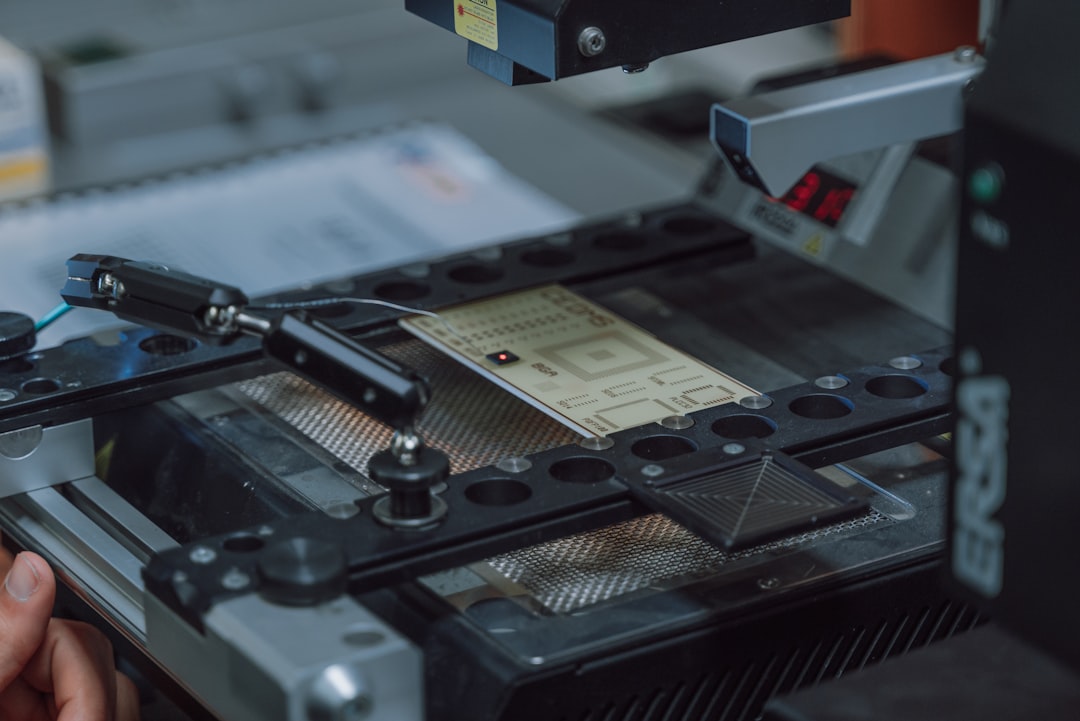

Canon Inc. announced on 24 November 2026 that it will begin accepting orders for the FPA-6300AS6 ArF dry scanner in early December 2026. The system marks the company's return to ArF dry lithography after more than two decades — Canon's previous ArF dry system, the FPA-6000AS4, was introduced in 2002.
The FPA-6300AS6 is built on the established platform of Canon's FPA-6300ES6a KrF semiconductor lithography system, which provides a proven mechanical and control foundation. Into this platform, Canon has integrated a newly developed projection lens with a numerical aperture of 0.93, enabling the finer patterning resolution that ArF (193 nm wavelength) exposure affords compared with KrF (248 nm) systems.
The system is designed to serve a broad application spectrum, explicitly including memory, power devices, and sensor devices. These segments are characterised by differing patterning requirements and, increasingly, non-standard substrate configurations. The FPA-6300AS6 accommodates small-diameter substrates, thin and thick substrates, and manufacturing processes that require backside alignment — features relevant to compound semiconductor fabs, MEMS producers, and advanced packaging lines where substrate diversity has expanded significantly.
Connectivity with Canon's Lithography Plus platform is supported via a common interface. Lithography Plus is described as a solution platform that aggregates equipment data and operational expertise to streamline service and optimise tool uptime. Integration with this ecosystem allows customers to consolidate data management across Canon's i-line, KrF, and ArF tool families — a consideration increasingly relevant as semiconductor manufacturers seek MES-compatible equipment with structured traceability and predictive maintenance capability.
From a market perspective, the FPA-6300AS6 enters a segment where demand for mid-range lithography — below the EUV threshold but requiring tighter overlay and resolution than i-line or KrF — remains substantial. Power semiconductors, image sensors, and certain memory architectures continue to rely on ArF dry exposure for specific critical layers, without requiring the complexity and cost of immersion or EUV systems. Canon's move extends its competitive offering in this tier, complementing products from ASML and Nikon in the ArF dry category.
Canon states that order acceptance opens in early December 2026, with the FPA-6300AS6 intended to broaden the company's front-end semiconductor manufacturing equipment portfolio.
Source: Canon Europe – https://global.canon/en/news/2026/20261124-2.html