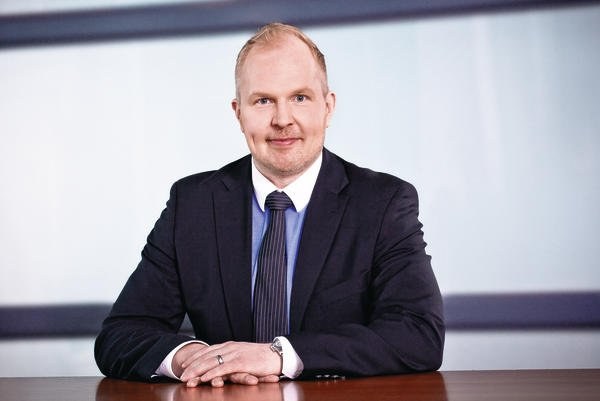
You are celebrating JOT Automation’s 25th anniversary this year. Since the company was formed by Veikko Lesonen in 1988 how has the industry changed and how has JOT Automation evolved to meet this change?
A lot of has changed, in fact new industries have been born during this time. In 1998 production volumes of mobile phones were maybe tens of millions. Today, it is giant industry with close to two billion mobile phones manufactured every year. Also mobile phones have developed into mini computers. Obviously these two things have had a major impact for our R & D team and to the solutions we supply. Our business landscape is also now truly global. Today we are an international company with employees in 13 countries in the Americas, Asia and Europe.
Have you seen a diversification in the industries you now supply products to? Are there certain industries that are developing more than others and require JOT Automation’s services more today than 25 years ago?
The amount of electronics, especially in modern cars in premium category, is amazing and developing all the time. When these features are rolled out to rest of the price groups, we believe our mass production know-how, which originated from telecom industry, will be of great assistance to manufacturers. The same can be said for the life sciences and medical technology industries.
You recently exhibited at APEX in America and used the show as a platform to showcase JOT M10, a new production test solution for smart devices – could you tell me why this was developed and what industries would find it most useful?
The production volumes of smart devices like smart phones and tablet PCs are booming and manufacturers are looking for solutions to speed up the development cycles, and to overcome the capacity challenges in manufacturing. The JOT M10 Functional Test Solution has been developed to answer this need. The JOT M10 Functional Test Solution will be the world’s most effective, scalable and modular solution for board / PCB-level functional testing, flashing and RF-tuning of smart devices like mobile phones, smart phones, tablet computers, PCs and computers, motherboards, automotive electronics, or basically any electronic product with high production quality requirements. One of the key benefits of the solution is that the very same test solution can be taken from R & D to production, securing an efficient and swift production ramp up. The other key benefit of the solution is the modular system architecture, which enables the M10 to easily adapt to production volume variations during a product’s life cycle, and also between the production lines and factories.
I understand JOT has recently launched the all in one solution for functional and final testing of smart devices, JOT G3 and the Odd Shape Placement Cell could you tell me more about these and why they were developed?
These two platforms are for different customer industries. JOT G3 is for mobile phone manufacturers. There is heavy competition in this market and good production quality is one very important factor to compete. JOT G3, a new and improved device to its predecessor JOT G2.5, enables fully automatic tests on handsets in a repeatable and reliable environment, helping to maximise capacity and quality with low labour costs. It enables fully automated examination of mechanical, RF, electrical, audio, and visual interfaces of handsets. Our solution for the odd-shape assembly is for a more diversified audience. In general the number of connections in electronic products, for example computers and televisions, are on the rise. Our solution has been designed to ensure that components that are out of placement range of the standard SMT machines are placed by using a diversified, fast, compact and cost effective machine. We believe our new robotic cell is the most cost-effective solution for placing odd-shaped components on the market today.
Have you got any other products that will be launching this year, and if so can you give EPP an exclusive on them?
The products that our customers are manufacturing are developing all the time and so are our solutions and we are having quite a few development projects at the moment. As an example, we are working on a new test and assembly platforms we know will be useful especially for our customers in automotive sector.
What industries are your R & D team concentrating on developing solutions for the most at present, and why?
Our focus is on our key accounts in telecom, computing, automotive and life sciences industries. These are all rapidly developing areas with a lot of synergies. Take smart phone, tablet, car display and blood sugar meters as examples. At MAG, part of JOT Automation, we are focusing to robotic finishing of jet engine parts and ship propellers.
The effects of a tight economy and intense competition means companies have to change their production methods, how have you helped in successfully addressing this challenge?
Economy is tight but most of our customers are growing. Of course it is our job to continuously develop more and more cost effective and flexible solutions for their production needs. We are also pushing best practises from one factory to another and our global presence is of great help.
The automotive landscape is changing and emerging markets are making companies re-think production strategies. How has this affected the way JOT Automation works for this industry?
It has changed a lot. We just recently celebrated our 10th anniversary of our subsidiary in China. We will also see a major automation boom in developing countries, but the solutions need to be adopted to meet local requirements.
You have a new experienced management team in place and are moving to new state-of-the-art premises, how do you think these new additions will affect JOT Automation?
We have an experienced management team but also the whole team of 300 employees have quite some experience. It is all about the people. And of course you need a roof on top of your head!
What is your plan for the business in the next 5 years and how do you hope to achieve it?
The needs of our current customers are growing but we are also engaging new customers. We will see major growth in the coming years. We will be recruiting more employees in strategic locations close to our customers R & D centres to serve them better. The earlier we get involved in our customers development programs the better results we will get.